Document
About the desk
Revision
October 2026
Languages
ES · VI · HT
Readers per page
Two, always
Desk
14 Mohawk Dr, Niantic

About Havelo · a translation desk in Niantic, Connecticut

You want to know whose hands your labeling passes through before a patient reads it. Here are the hands, and the rules they keep.

Havelo is a desk, not a floor. It sits on Mohawk Drive and holds to a narrow, old-fashioned trade: carrying instructions for use, carton labels and patient leaflets into Spanish, Vietnamese and Haitian Creole, then reading every page a second time with fresh eyes. We work the way a good print shop proofs a plate — slowly where a mistake would cost someone, and plainly everywhere else.

Files arrive on this desk from

  • Regulatory affairs teams at device makers
  • IVD kit manufacturers
  • Clinical-trial sponsors
  • Home-use device brands

What they share: a reader on the far side of the page who may be holding the device for the first time — and a QA file that has to show why every word was chosen.

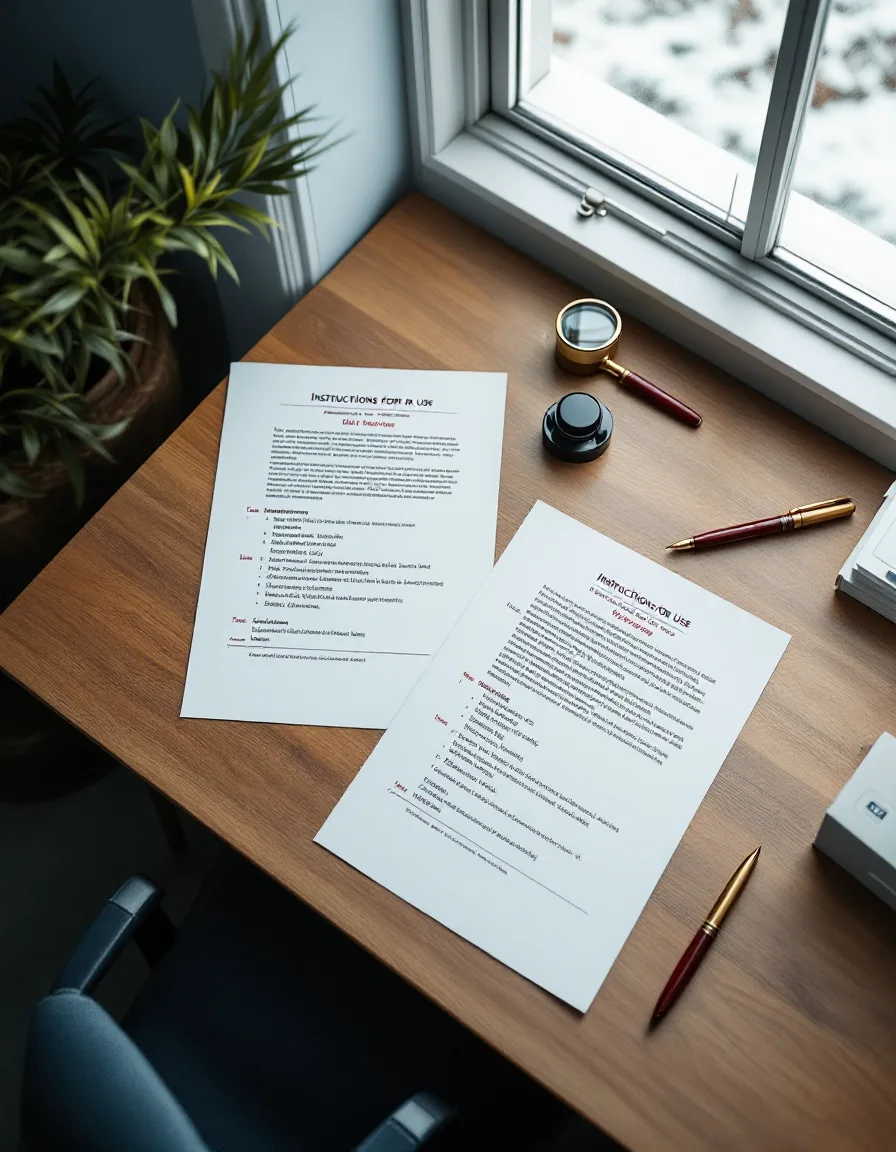
Read twice, signed once Two printed proofs of a device instructions page, English beside Vietnamese, marked in oxblood ink with a loupe and pen on a desk by a window. Mohawk Dr · Niantic, CT
The working surface: source on the left, translation on the right, every mark made in the reviewer’s red.

How the desk came to be kept this way

A Desk Run Like a Labeling File

Small on purpose, narrow on purpose, slow at exactly the points that matter.

Files come into Havelo by email, are opened by the linguists who will translate and read them, and go back out carrying their signatures. There is no project-management layer in between to retype your request, and no queue where a carton label waits behind somebody else’s marketing brochure. The person who answers the phone on Mohawk Drive can tell you which glossary your term sits in.

We chose depth over reach. Spanish, Vietnamese and Haitian Creole are the languages our linguists read without effort — and the languages of a great many patients opening a device carton in this country. Holding to three means each client glossary is kept, reopened and reused revision after revision, by people who remember why a term was chosen the first time.

The habits we borrow are older than any translation software: the print-shop proof, the margin mark, the signed plate. They suit device labeling, where a single line on a carton may be the only instruction anyone reads before they use the thing.
Havelo’s house rules, recorded as a revision history
RevClauseHow it plays out on your file
A Three languages, each read natively Spanish, Vietnamese and Haitian Creole are the only languages on the desk because they are the ones our linguists grew up reading. For anything else, we tell you so on the first call rather than pass your labeling along unseen.
B A second reader who hasn’t seen the draft The reviewer works from your approved English and the finished translation side by side — never from the translator’s notes — so one person’s blind spot can’t be read past twice.
C Disagreements settled on paper Every point where the two readers differ goes into a reconciliation log with the reasoning beside it. The log ships with your files, so your QA team can audit the choice instead of trusting it.
D Proofed where fonts actually break Tone marks and accents are checked in the exported PDF, after layout — because a missing glyph shows up on the printed carton, never in the word processor.
E A margin note before an invented word
Pinned above the desk
When a device term has no settled Kreyòl or Vietnamese equivalent, we flag it, offer options, and let your team decide. We will not coin a neat word quietly to fill a line.
F Read first, then priced once We open the file before quoting, then set one fixed figure between $300 and $1,500. The number on the quote is the number on the invoice.

The people at the desk

Three Chairs, Three Signatures

Every project crosses three sets of hands, and each signs for exactly what it touched. On a short leaflet the translator may also set the page — but the translator and the reviewer are never the same person.

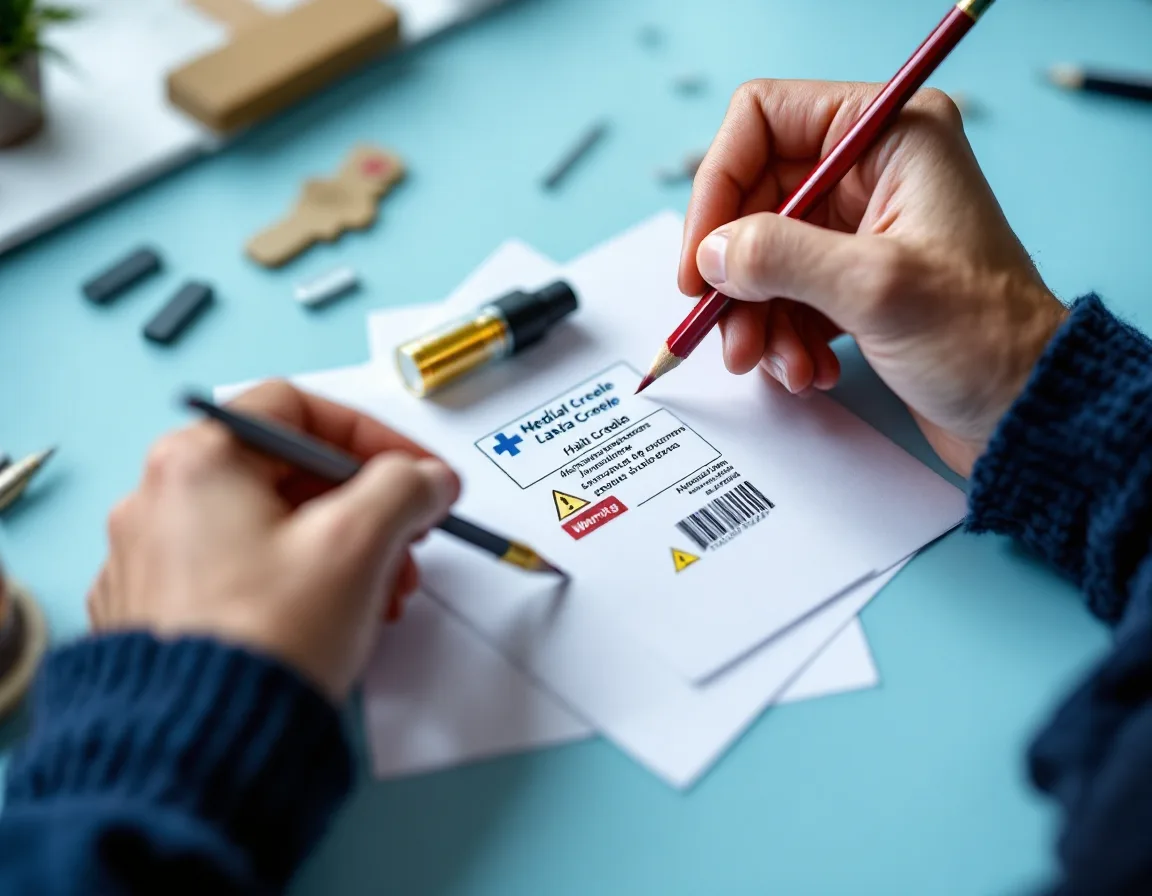
A reviewer’s hands marking a printed carton-label proof with a red pencil, a loupe resting over a warning caption.

The first chair

Translator of Record

Works from your approved English and the project glossary, into their native language, in the register your reader needs — clinical for the IFU, kitchen-table plain for the home-use leaflet.

Signs
The translation itself
Never
Reviews their own page
Hasn’t seen the draft

The second chair

Reviewer of Record

Reads the translation against your English line by line: doses, contraindications, units of measure, symbol captions. Marks in red; nothing is corrected silently.

Signs
The reconciliation log
Never
Changes a word without writing down why
Opens every PDF

The third chair

The Setter

Returns the text to your IDML, DOCX or XLIFF, checks how warnings break across lines, confirms 21 CFR 801 labeling conventions, then proofs each diacritic in the exported file.

Signs
The certificate of accuracy
Never
Releases a file they haven’t opened as print

Proofing notes from the desk

The Specimen Sheet: What Each Language Asks of the Page

Three languages, three different ways for a label to go wrong after the translation is already right. These are the marks we check by eye, one character at a time.

Checked in the final PDF

VI · Vietnamese

Tiếng Việt

Two marks on one letter — the circumflex above and the dot below. A font without the combined character drops one, and the word becomes a different word. We proof tone marks letter by letter on every warning.

Liều dùng“Dosage” — two tone marks, either one easy to lose.

ES · Spanish

Español

Questions open with ¿, the reader is addressed as usted unless your protocol says otherwise, and the decimal convention for doses is fixed once in the glossary, then held on every page of every revision.

¿Siente dolor o mareo?“Do you feel pain or dizziness?” — a patient prompt, opened properly.

HT · Haitian Creole

Kreyòl ayisyen

Kreyòl is spelled the way it sounds; the grave accent on ò and è marks an open vowel, not a French flourish. Patients often read it aloud to family, so every sentence has to hold up spoken.

Li enstriksyon yo anvan ou sèvi ak aparèy la.“Read the instructions before you use the device.”

Struck from the house record

What Never Leaves Mohawk Drive

A craft is defined as much by what its makers decline as by what they deliver. These are the shortcuts we’ve crossed out, and what goes in their place.

Crossed out in red ink
  • Never: Machine output, sent on unread

    every sentence is written by one linguist and read by another. Tools keep our terminology consistent; they don’t sign anything.

  • Never: A fourth language, handed to a stranger

    if your file needs a language beyond these three, we say so at the start, before you’ve spent a dollar with us.

  • Never: A deadline that skips the second read

    the delivery date arrives with the quote and always leaves room for review. If a date can only be met by skipping it, we’ll decline the date.

  • Never: A tidy word coined to fill a carton

    an unsettled term gets a margin note and two or three honest options, for your regulatory team to choose between.

  • Never: A quote that grows once work begins

    if your engineers issue a new revision mid-project, the changed pages are quoted separately, in writing, before anyone touches them.

Return slip · detach and send

Send the File. We’ll Read It Before We Price It.

Tell us the document, the target language and the page count. You’ll get a fixed price between $300 and $1,500, and a delivery date that keeps the second read intact.